Friction feeders built in St. Louis since 2004 — same shop, same crew, three machines.
Leave an email and we will come back with the machine it lands on, the options it needs and what it costs. Three feeders, built in St. Louis: big, medium, small.
Or call (636) 298-0776 — one of four people picks up.
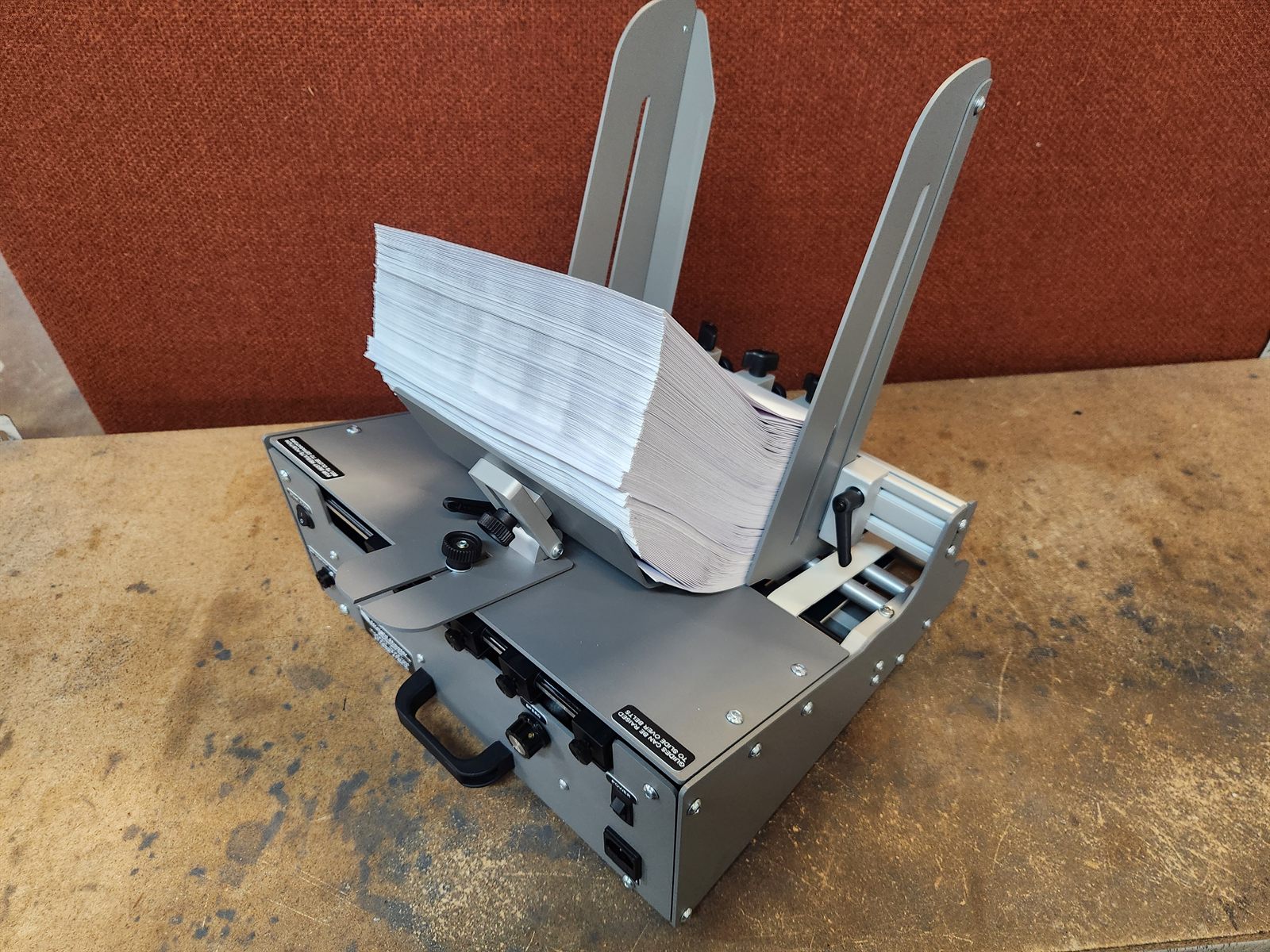
Start with what the stoppages are costing you, then see the machine that ends them.
Do the arithmeticGive us the width and what the job needs. We will tell you which of the three it lands on.
Size it upThe same again, the same but wider, or belts and parts. No sales pitch in the way.
Straight to itEvery feeder claims it feeds. These are the four reasons a Straight Shooter keeps feeding on the piece that stopped the last one.
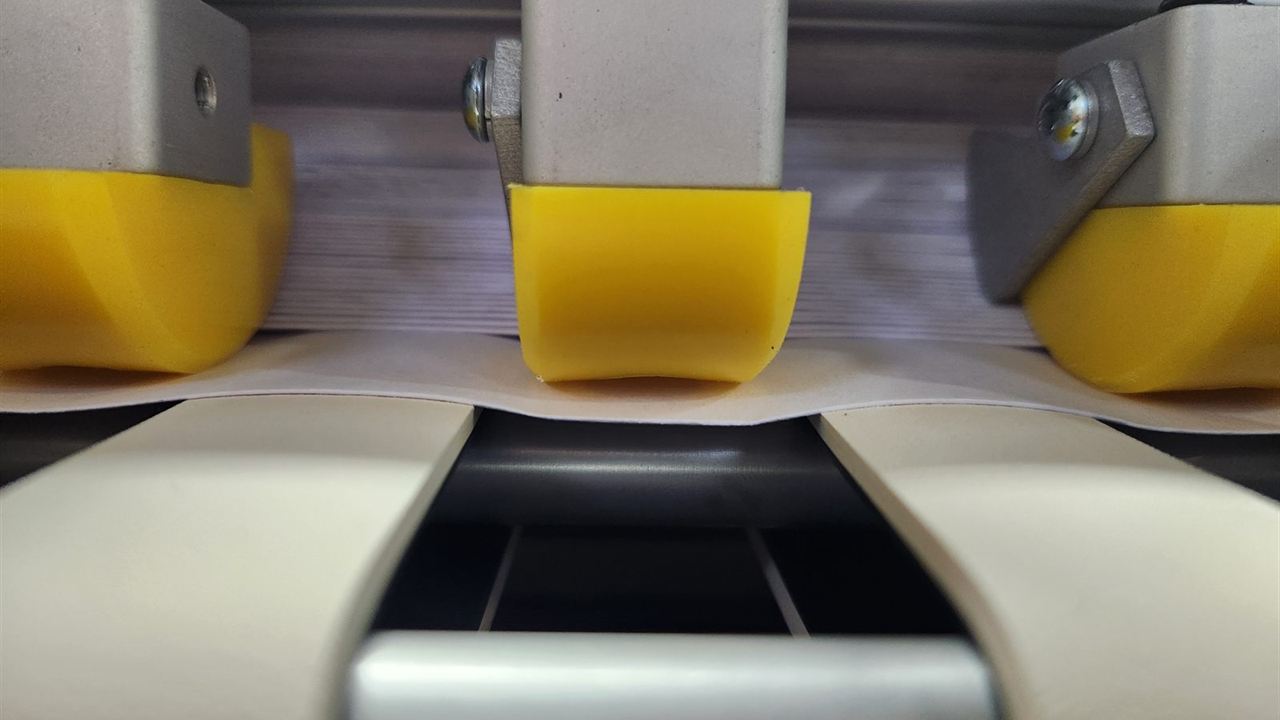
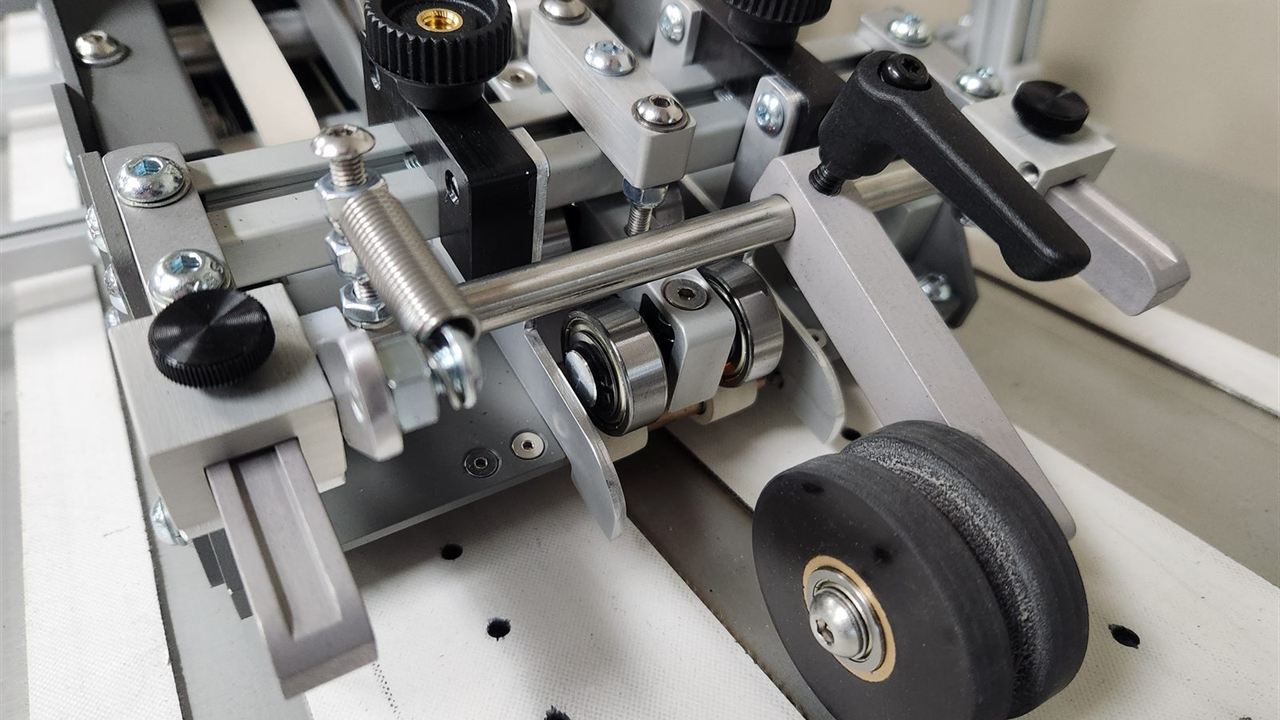
See all three feedersNo nip point. The piece buckles against the separator instead of getting pinched between two rollers, so one leaves the stack and the next one stays put.
Set the gap you want. Each piece gets pulled away from the one behind it, so the machine downstream sees even spacing at full speed.
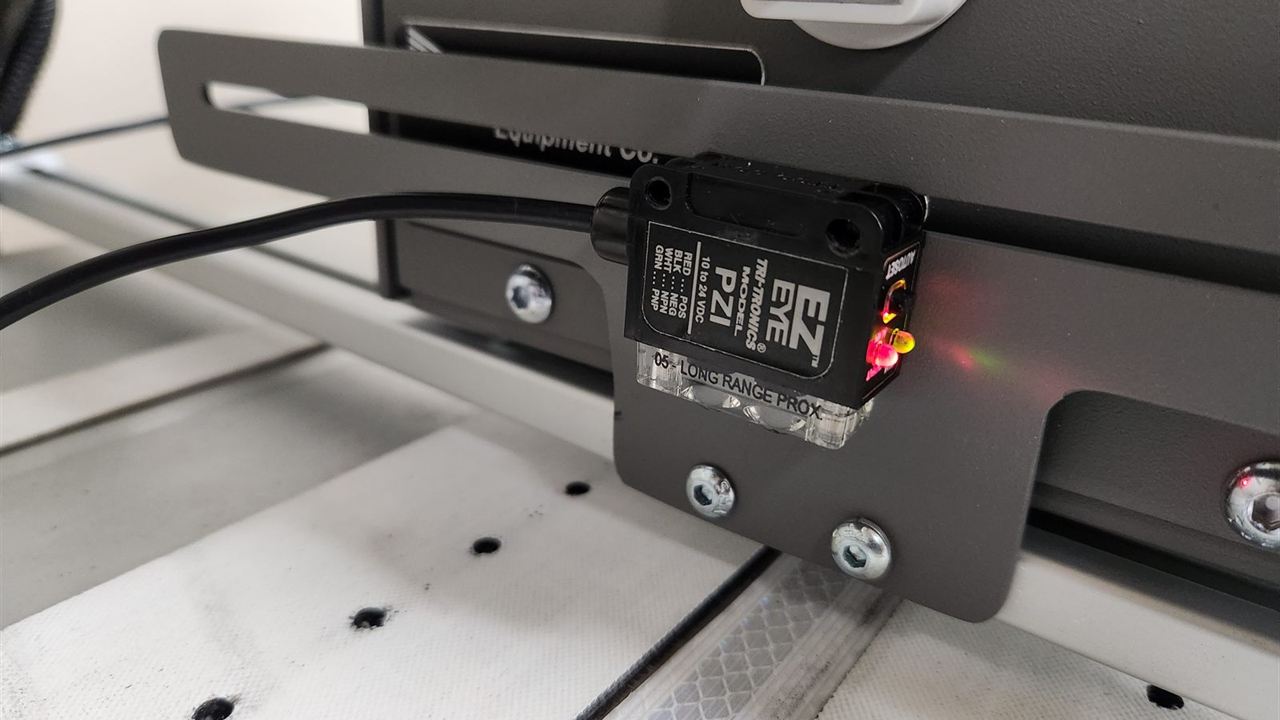
It counts what it fed, not what it should have. Sensors read every piece off the deck, so the number on the screen is the number in the box.
Run continuous until the hopper is empty, batch to a fixed count, or one at a time when the machine downstream asks for it.
Fat, lumpy, uneven, glossy, stuffed — however it came off the press is how you load it. Pick a piece, leave the stack as crooked as it really is, and run it. The counter climbs. The jam count does not.
Everything these machines feedNot the price of the feeder — the price of the one you have. Set the three numbers to your floor and watch the week disappear.
Cleared time is capped at 45 minutes an hour — past that the line is not running, it is being repaired.
Five stations between the stack and your line. Scroll through them once and you will know more about feeding than most people who sell it.
Open the full paper path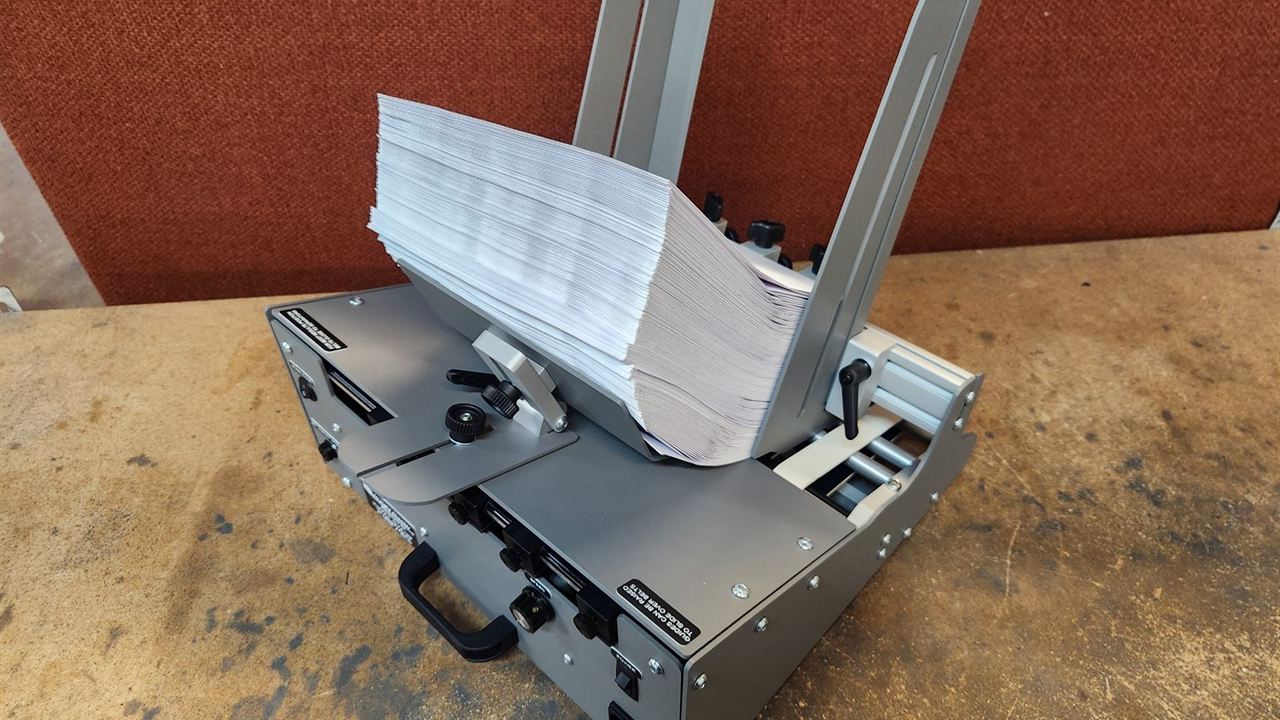
 Hopper · R-14, St. Louis
Load it the way it came off the press — fat, lumpy, uneven, curled. The stack rides an angled bed and the machine works off the bottom, so nobody has to jog it square first.
Holds a full skid’s worth between loadsHere is the whole argument. There is no nip point. The piece meets the separator and buckles instead of getting pinched between two rollers, so the sheet under it never comes along for the ride.
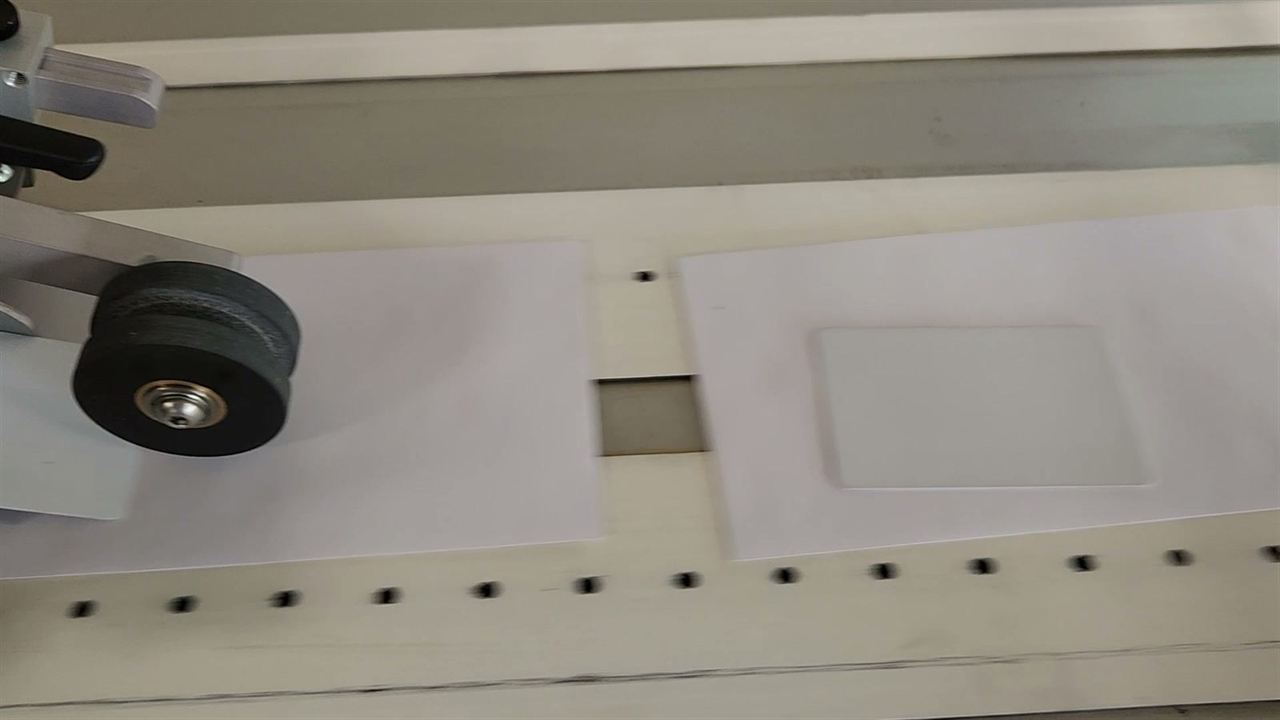
This is why it doesn’t doubleThe moment a piece clears the stack the accelerator takes it and pulls it away from the one behind. You set the gap, and the gap holds at speed instead of closing up as the run heats up.
Even spacing into your lineA sensor reads every piece off the deck, so the count is what actually fed rather than what the cycle counter thinks fed. Run to a number, run to a batch, or run the hopper dry.
Batch · on demand · continuousFlat, square, and at the height you need it. Belt, conveyor, inkjet base, tabber, folder, packaging line — it hands off to what is already on your floor.
Feeds into equipment you already ownKeep scrolling to follow the piece
Start with the piece that is giving you trouble. Set its width, tick what the job needs, and we will tell you which feeder it lands on.
Open the full configuratorA 3.5 in. business card sits well inside the R-12. The R-14 and R-20 take it too if you are running wider work on the same machine.
People who come to look at one tend to do the same thing: they stop at the frame, put a hand on it, and check the thickness of the plate. These are not delicate machines and they were never meant to be — there are Straight Shooters that have run three shifts a day for years and are still on their original frames.
Belts wear. That is the list. Every belt comes off in minutes with one Allen wrench, and it does not need a service call.
How the machine works
From business cards to catalogs. Affordable, and easy to configure.Three sizes · four options · an answer the same day
Cards, booklets, calendars and catalogs off your own press, fed into whatever finishes them.
Envelopes and self-mailers, stuffed and uneven included, at a gap your inserting line can read.
Inserts, literature, coupons and discs dropped into cartons, counted as they go.
The feeder inside the machine you build or sell. Integration, drawings and repeat builds.
For OEMs and ownersPut it in a box and mail it to St. Louis. We will run it on the machine we think it belongs on and send you the video — feeding, counting, and the piece coming off straight. If none of ours handle it, we will tell you that instead.
Straight Shooter started in late 2004 with one goal: make a feeder that feeds straight. Every one since has used our patented Buckle Separation™, and every belt on it comes off in minutes with one Allen wrench. Same shop, same crew, and tens of thousands of feeders in the field.
Our feeders run in print shops, mailing houses, packaging lines and inside equipment sold under other names. If you have a piece that has to leave a stack one at a time and arrive straight, we have probably already run one like it.