Big, medium and small. The model numbers matter to the people who already own one. For everyone else the question is how wide the piece is, and then what the job needs bolted onto the machine.
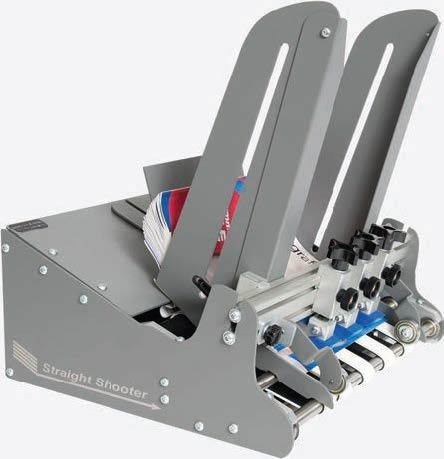
Twenty inches wide by seventeen long, in a compact, heavy-duty feeder light enough to move from one job in your plant to the next. Runs the large documents and still handles the small stuff.
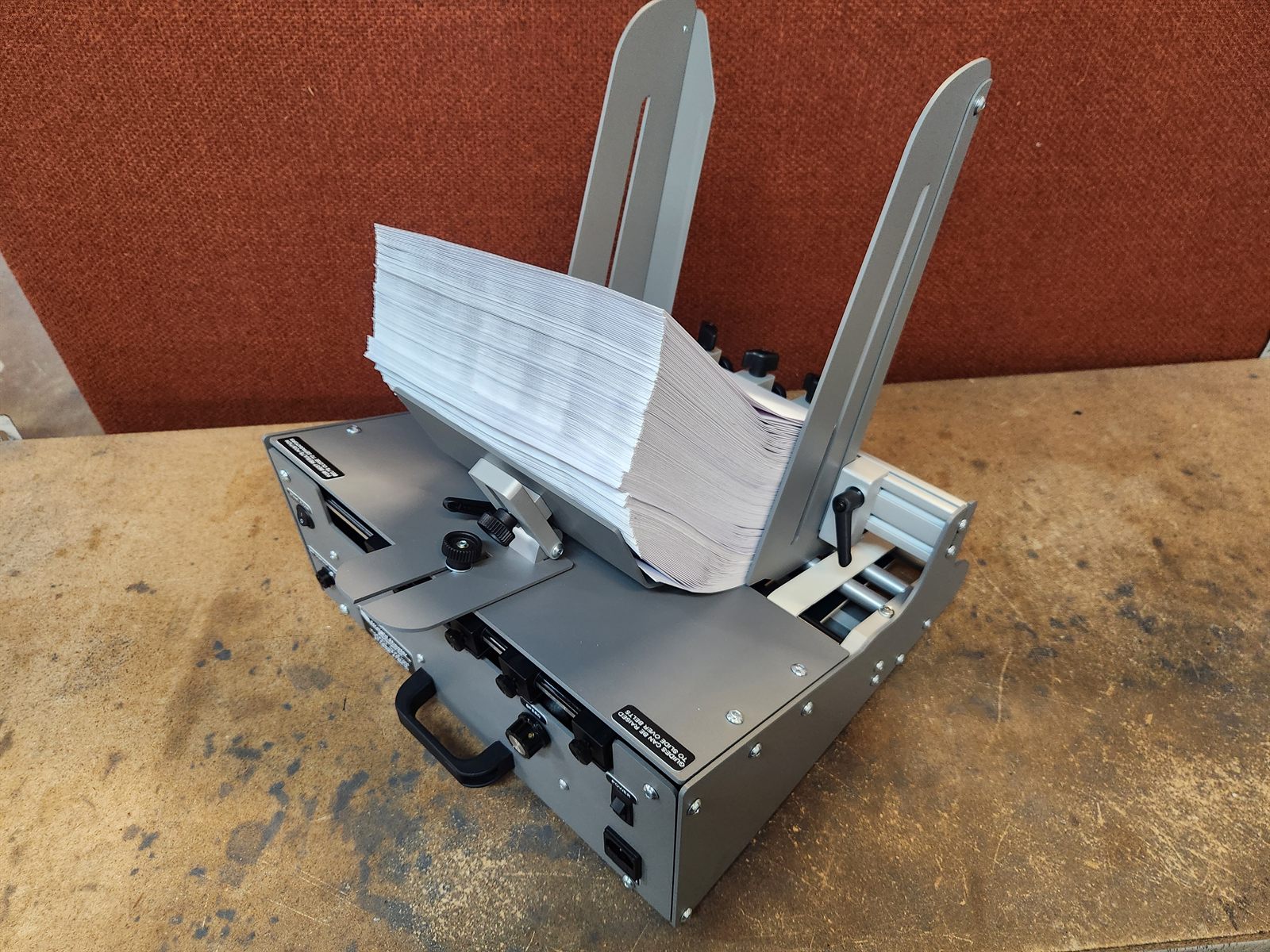
Up to fourteen inches, and the one most shops end up running. If your work is envelopes and self-mailers, start here and stop reading.
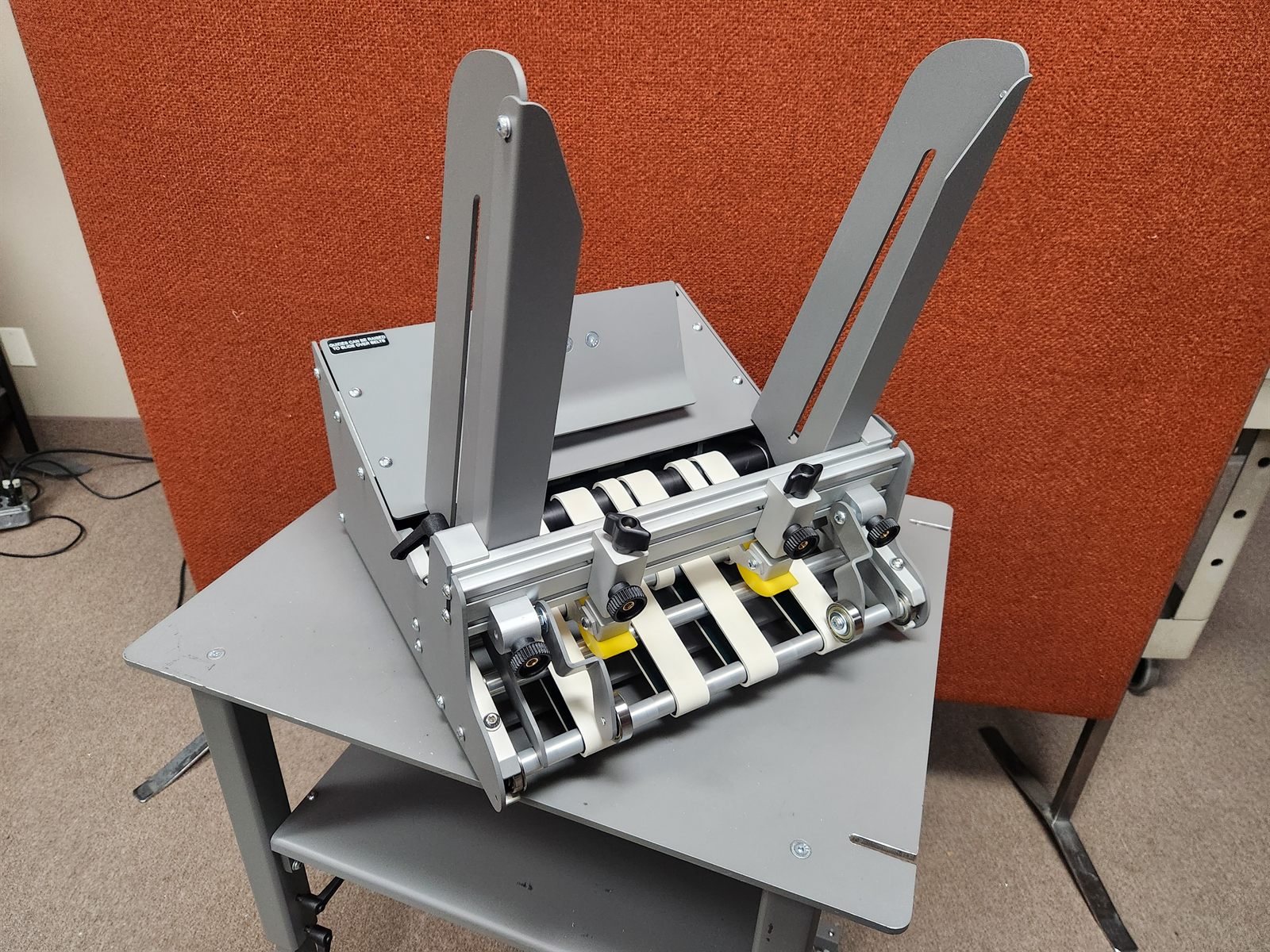
Three inches up to twelve. The machine for pieces small enough to be fussy — the ones that skid, nest, or stick to the piece under them.
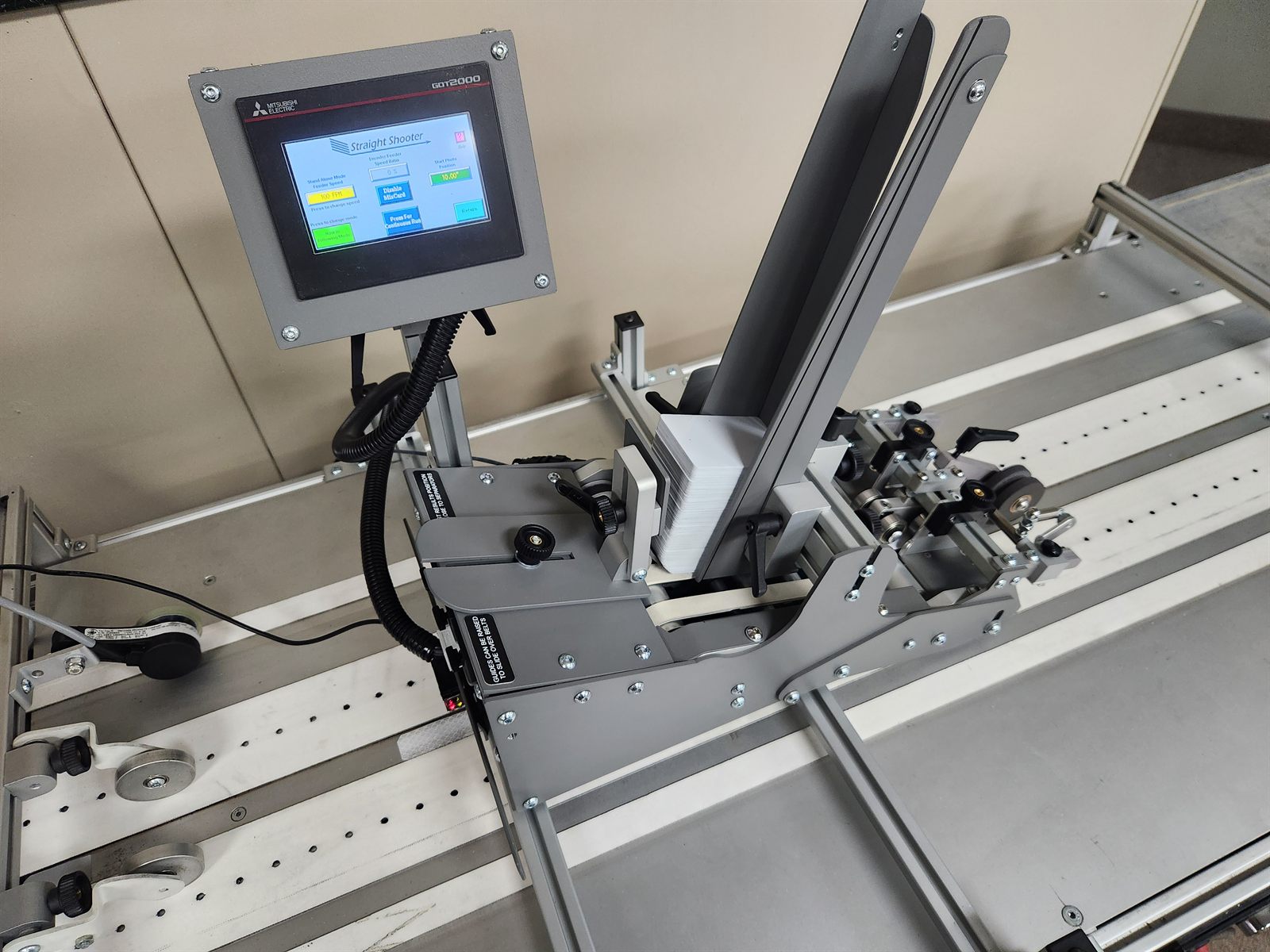
Not a fourth size but a different job. The SA-5 is a servo attaching feeder that places cards onto work as it passes on your line.
Everything that actually differs between them. Anything not on this list is the same machine in a different width.
All three take pieces from 2 to 17 in. long and up to 3/8 in. thick. Figures are from the R-12, R-14 and R-20 brochures. Full spec sheets go out by email when you are ready for them.
The old catalogue split the line into continuous, demand and specialty machines. It is simpler than that now: same three feeders, and you tell it how the job runs.
Feeds until the hopper is empty and you keep loading it. The setting for a line that is not supposed to stop — inserting, inkjet, packaging.
One piece each time the machine downstream asks for it. Your controller sends the signal, the feeder answers, nothing gets ahead of anything.
Counts to a number, stops, leaves a gap, starts the next batch. Fifties into a carton, hundreds onto a skid — the count is read off the deck, not guessed.
When none of the three take your piece, we build a special. That is a phone call, not a form, and it starts with you sending us the piece.
Talk to the shopWidth is what decides it. Everything to the left of the mark on each line feeds on that machine.
Sitting between two sizes? The wider machine runs the narrow work too — it just costs more than it needs to.
These four go on the R-12 and R-14. The R-20 has its own list: a floor or table stand, a card kit for small media, and single-shot and batch counting. Pick the ones the job needs and leave the rest off — you are not paying for a feature you will never switch on.
Pulls each piece away from the one behind it so the gap into your line holds at speed.
Ask for the option priceReads every piece off the deck. Run to a number and the machine stops on the number.
Ask for the option priceFixed counts with a gap between batches, or one piece at a time when the machine downstream calls for it.
Ask for the option priceHeight-matched to whatever it feeds, so nobody is shimming a feeder with plywood again.
Ask for the option priceSend us the piece. We will run it on the machine we think it belongs on and send you the video — feeding, counting, and coming off straight.