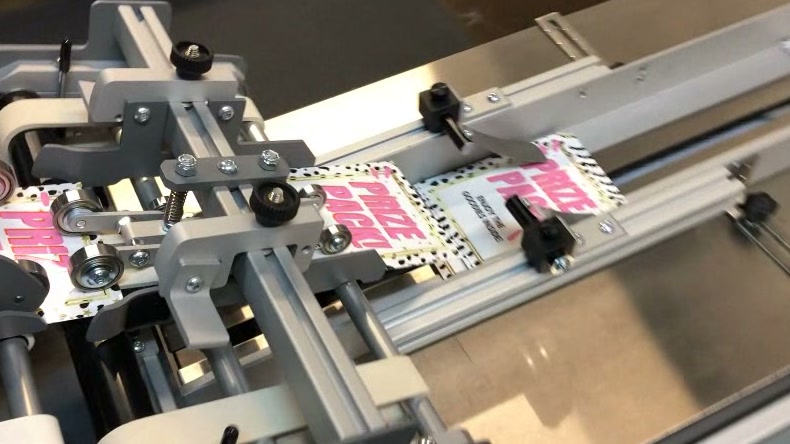
Three inches up to twelve. The machine for pieces small enough to be fussy — the ones that skid, nest, or stick to the piece underneath.
17 × 17 in. footprint · 40 lb
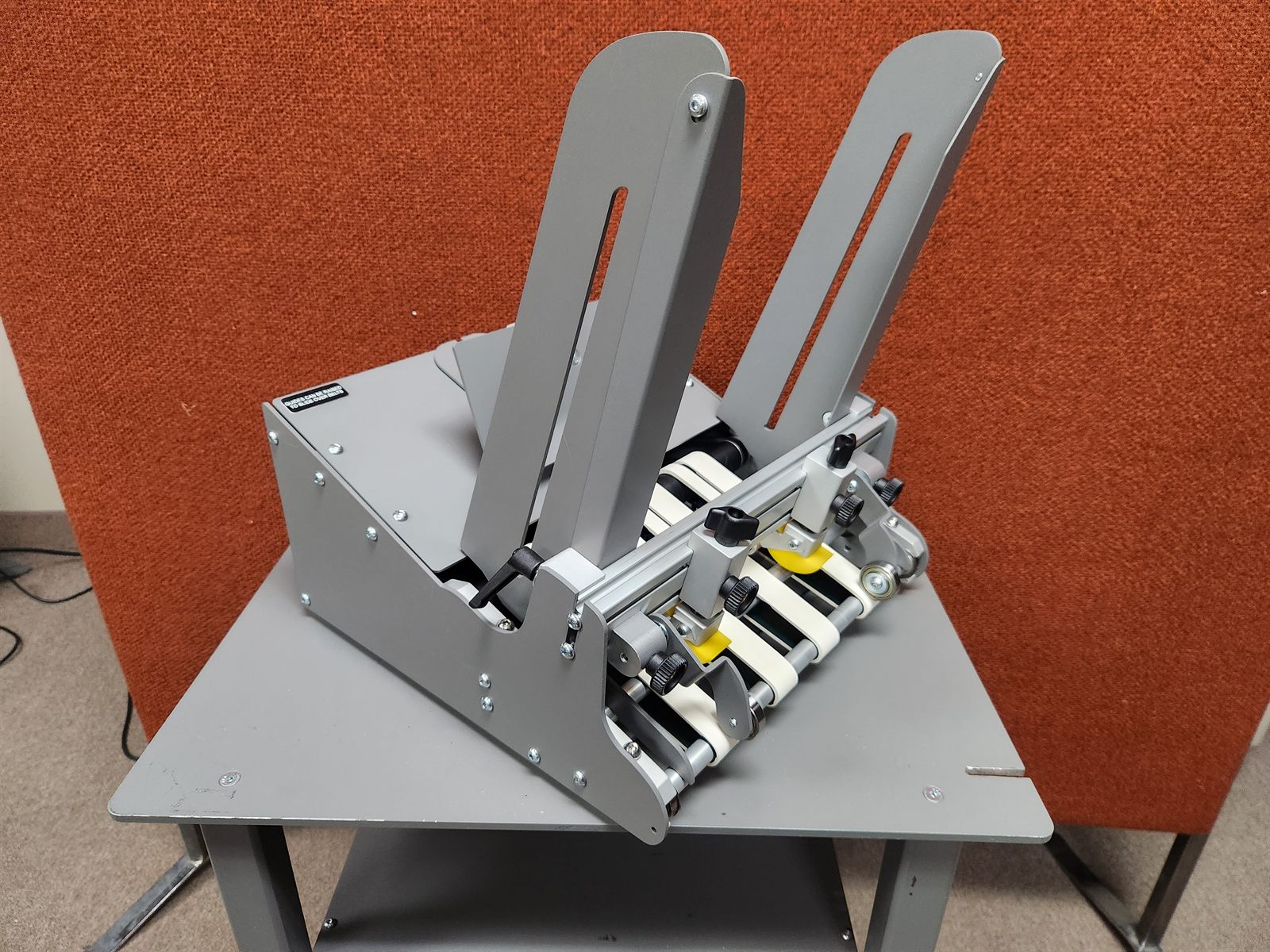
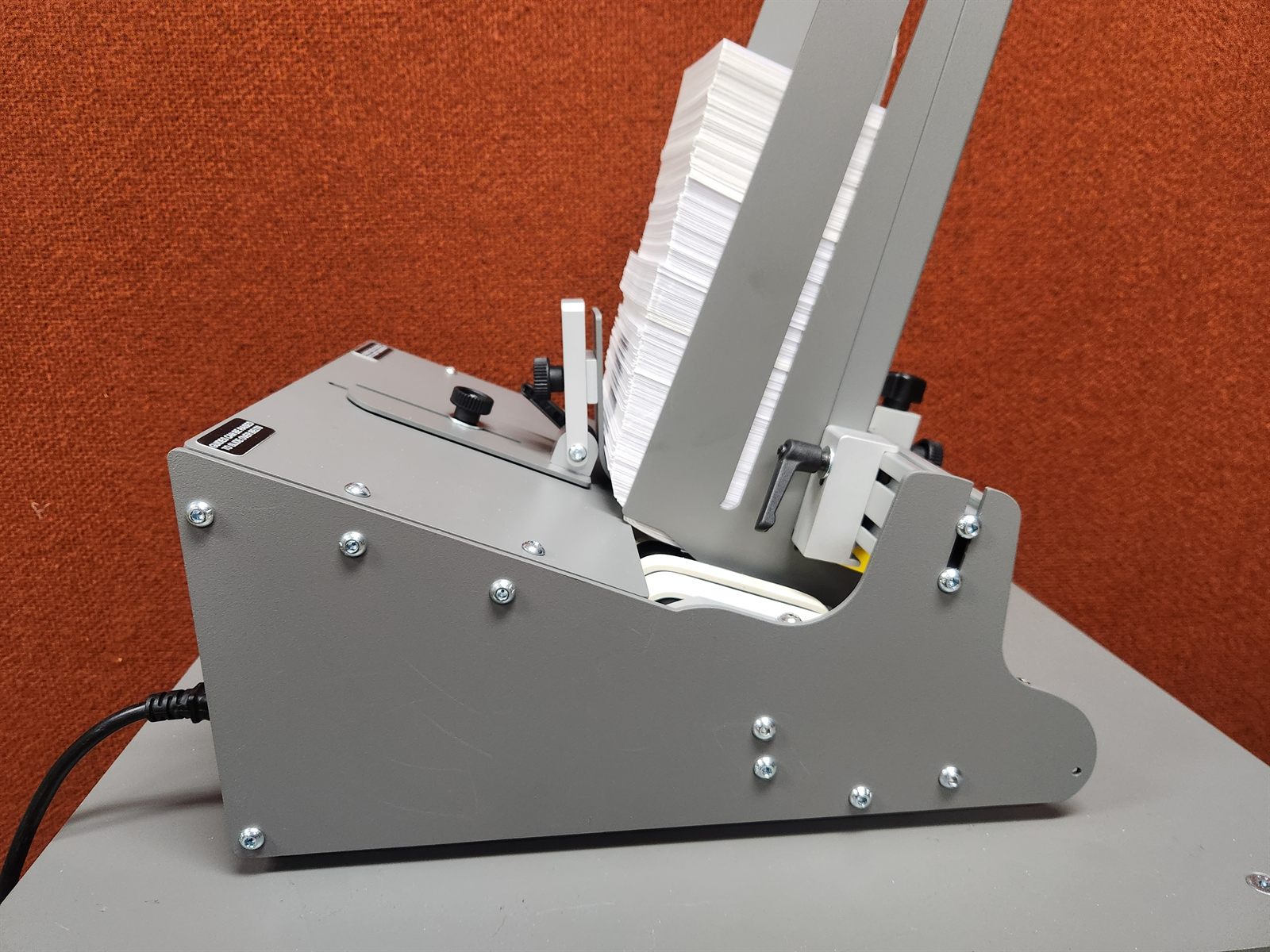
The hopper, loaded
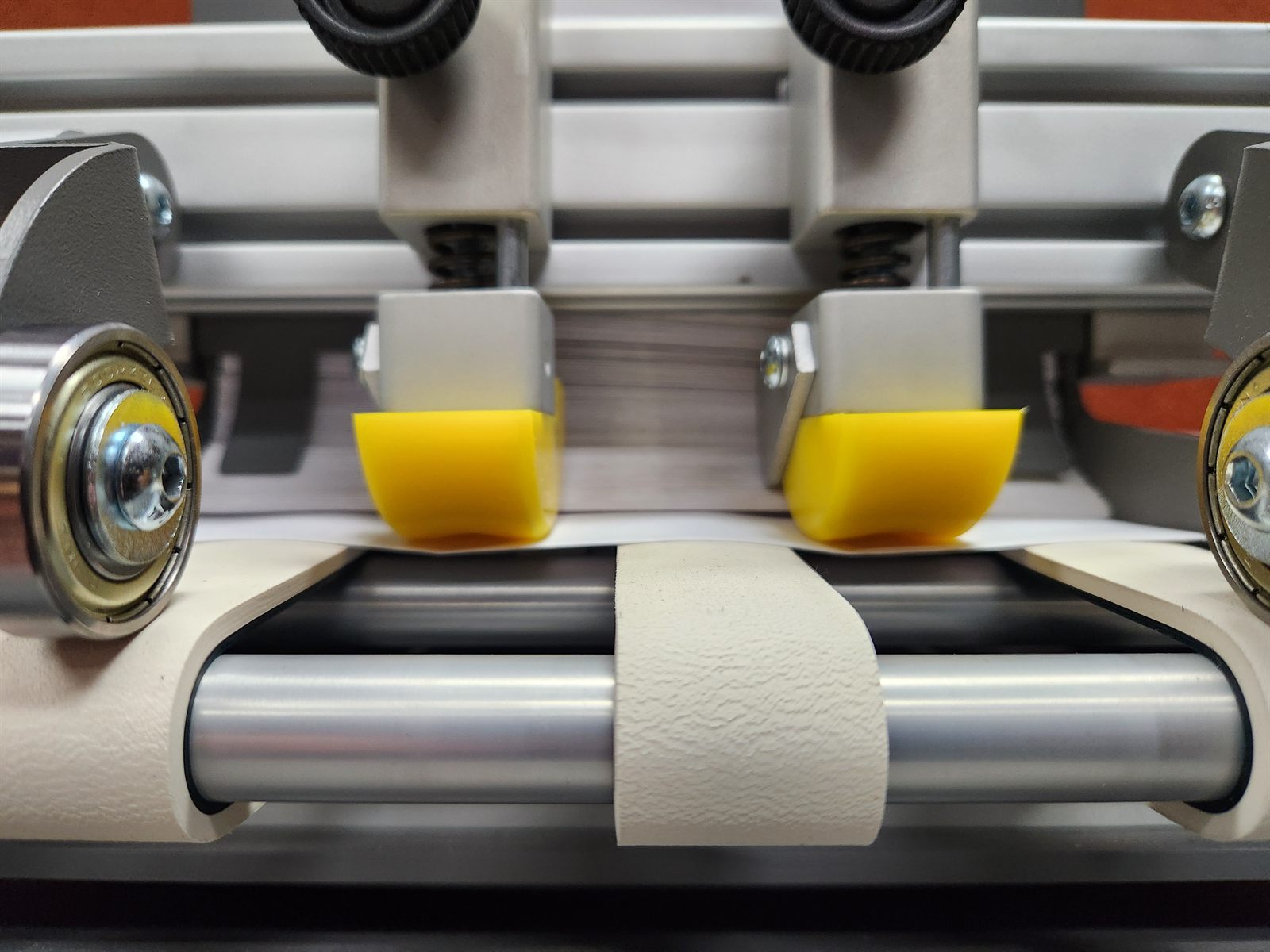
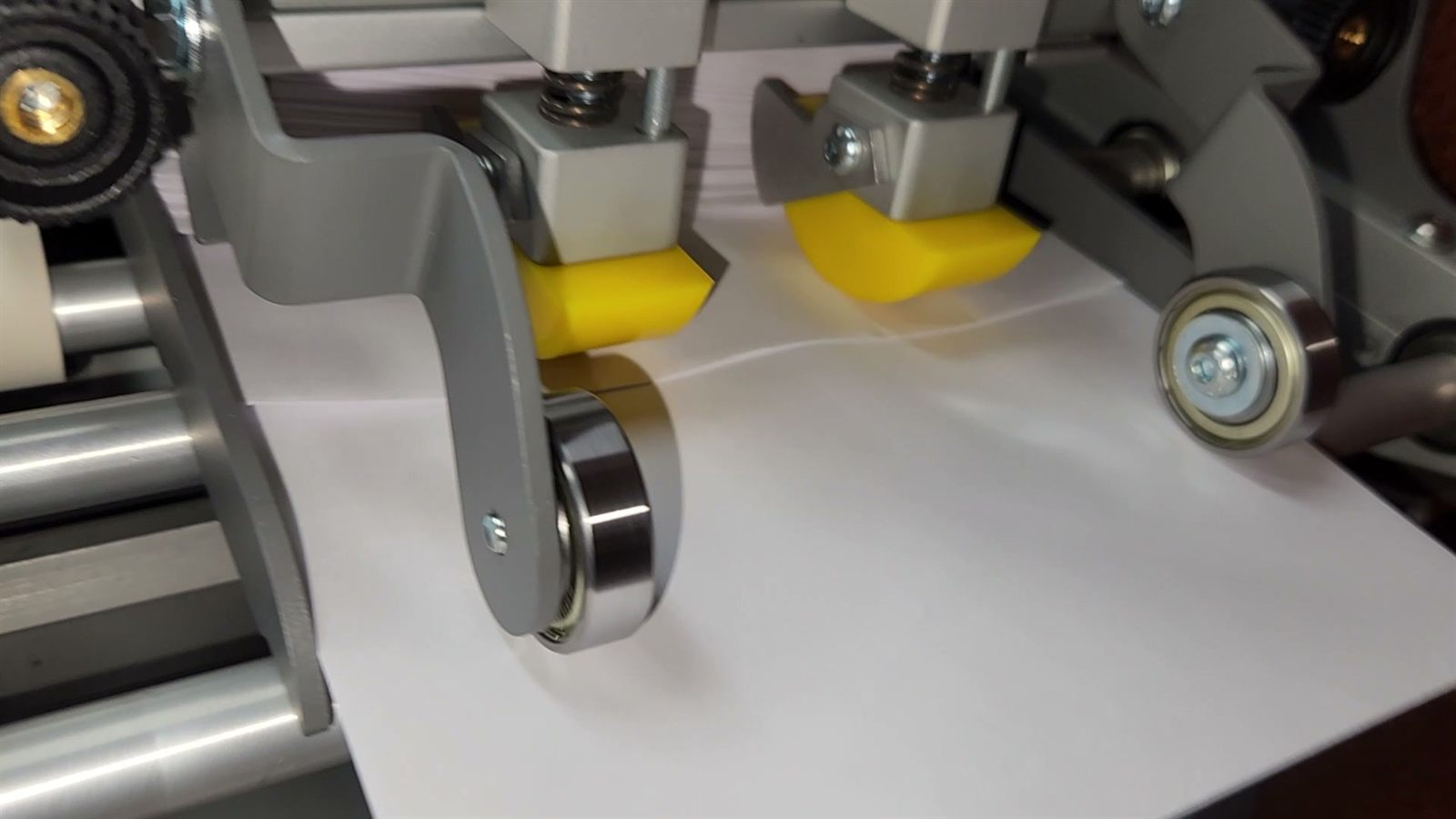
Separator and buckle gap
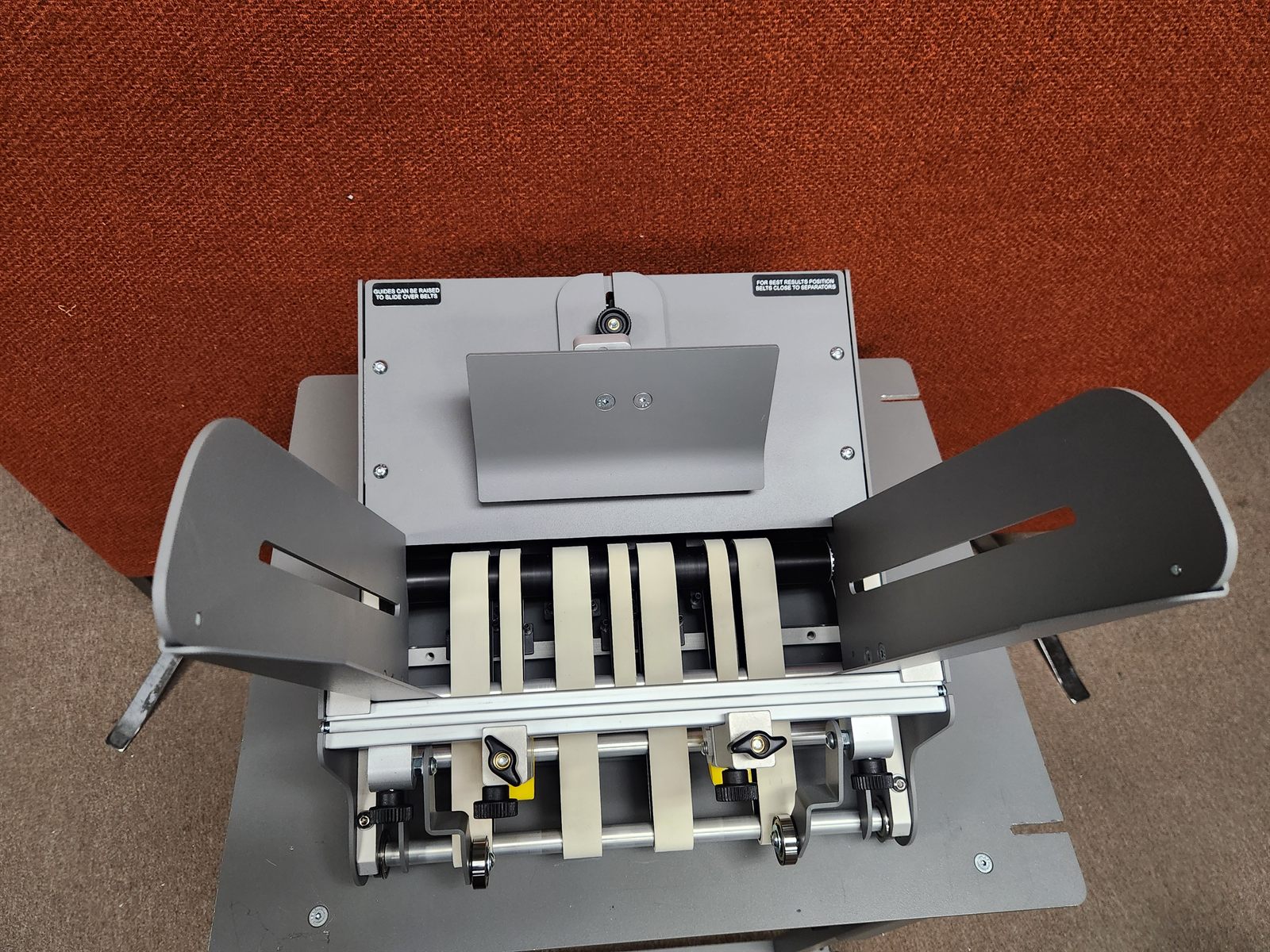
The deck, from above
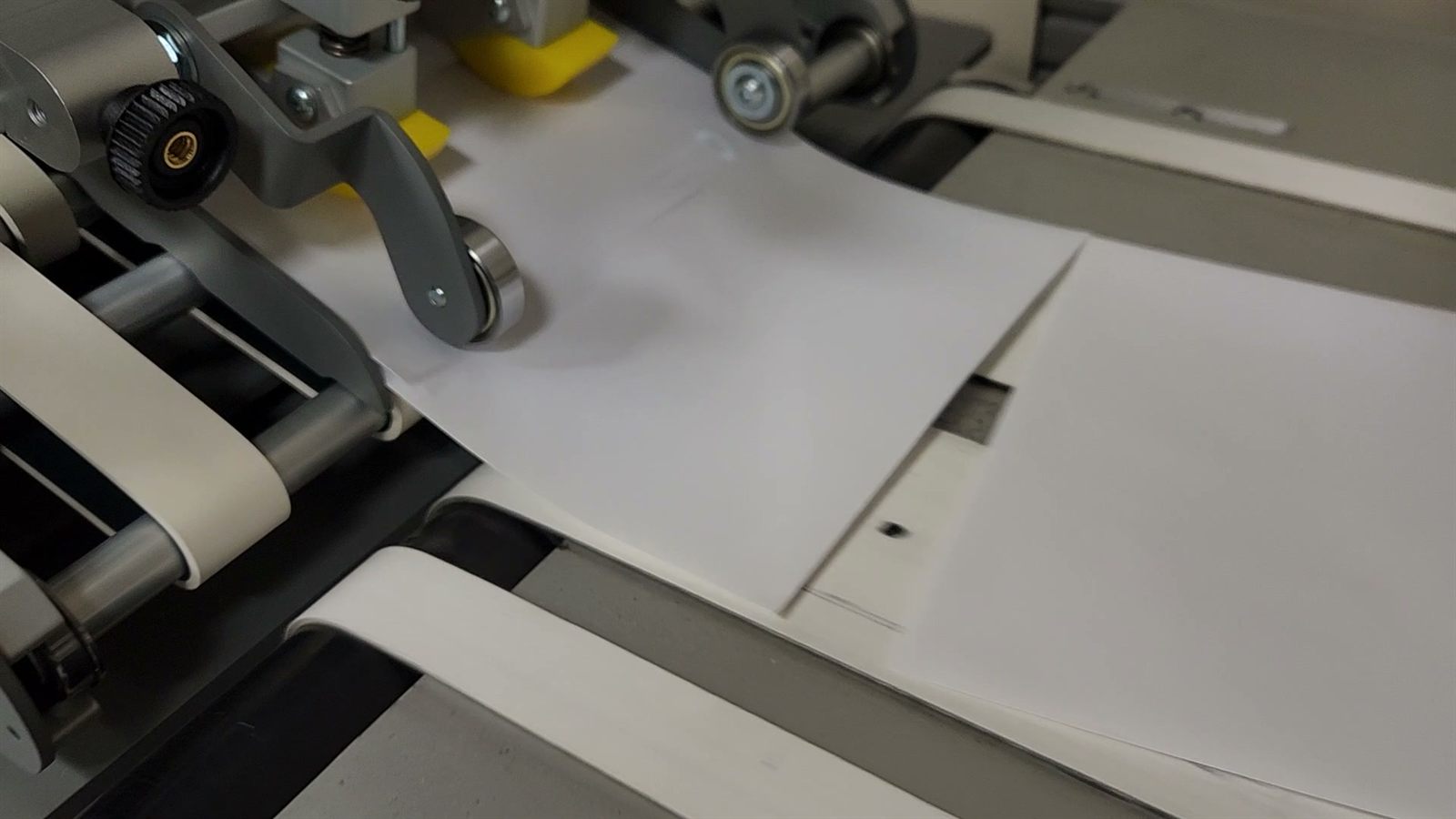
Running, shot in St. Louis
Anything that has to leave a stack one at a time and arrive square, at a size where most feeders start guessing.
The piece meets the separator and buckles instead of getting pinched between two rollers. One leaves the stack, the one under it stays where it is — which is why uneven, glossy and stuffed work runs off the same pile as everything else.
Small pieces are where the nip point does the most damage — there is not enough length for a second sheet to slip and be caught. The buckle takes that failure mode off the table.
Four options, all of them available on the R-12. Leave off the ones the job does not need.
Sets the gap into your line and holds it as the run heats up.
Counts what actually fed, so the number on the screen is the number in the box.
Stop on a count, or feed one piece each time the machine downstream asks.
Height-matched to the equipment it feeds.
Against the other two, by the width of the piece you are feeding.
Box it up and mail it to St. Louis. We will run it on the R-12, film it, and tell you straight whether this is the machine for it.