Five stations between the stack and your line. Walk through them once and you will know more about feeding than most of the people selling it — including why the machine you have now stops.
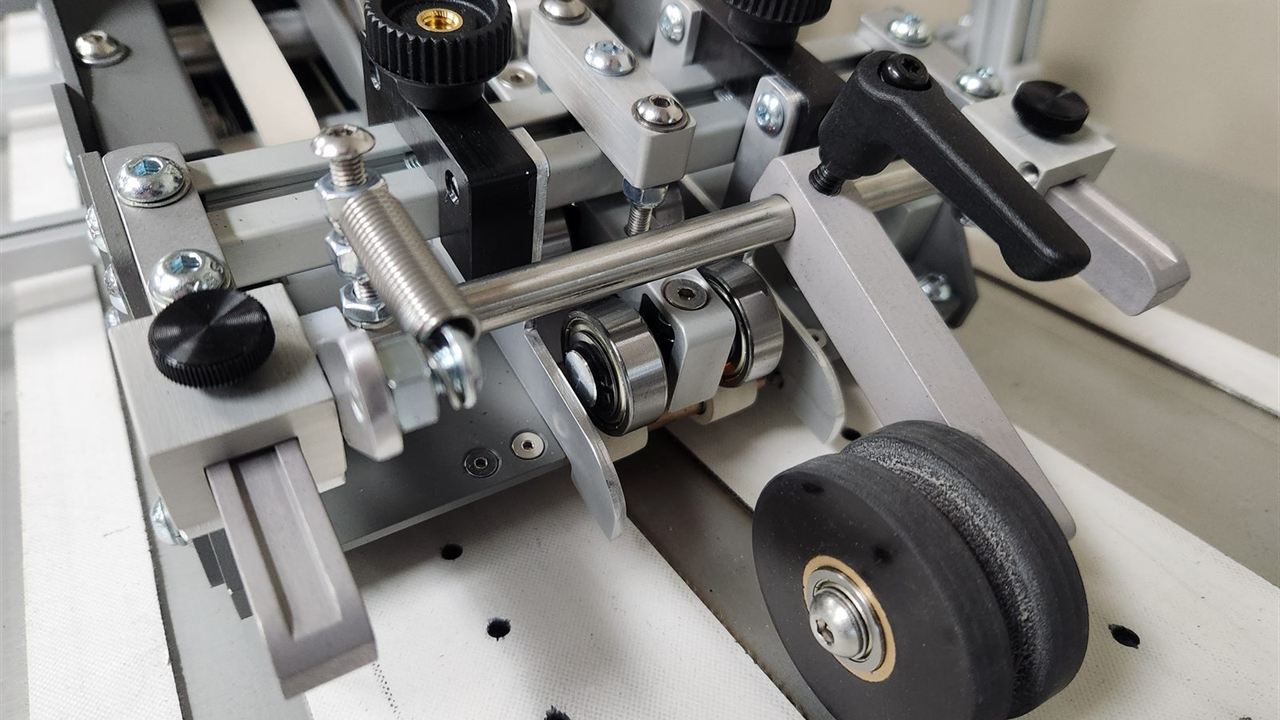 Hopper · R-14, St. Louis
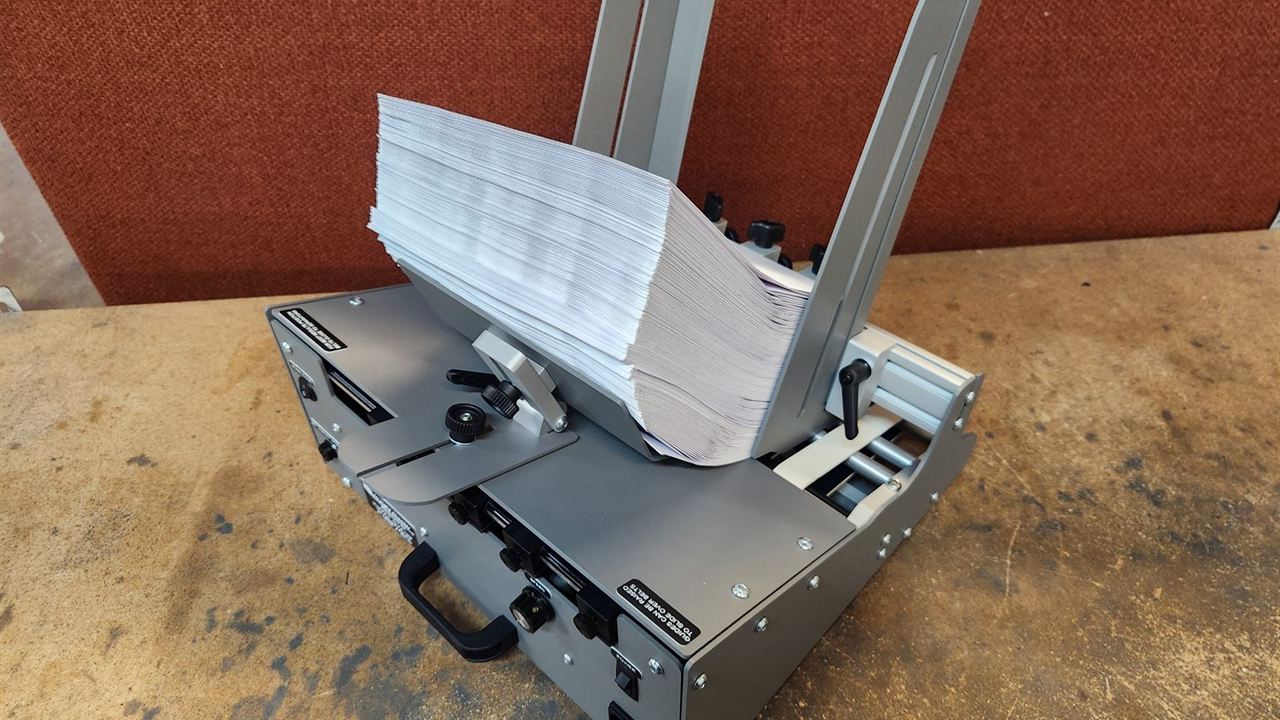
Load it the way it came off the press — fat, lumpy, uneven, curled. The stack rides an angled bed and the machine works off the bottom, so nobody has to jog it square first.
Holds a full skid’s worth between loadsHere is the whole argument. There is no nip point. The piece meets the separator and buckles instead of getting pinched between two rollers, so the sheet under it never comes along for the ride.
This is why it doesn’t doubleThe moment a piece clears the stack the accelerator takes it and pulls it away from the one behind. You set the gap, and the gap holds at speed instead of closing up as the run heats up.
Even spacing into your lineA sensor reads every piece off the deck, so the count is what actually fed rather than what the cycle counter thinks fed. Run to a number, run to a batch, or run the hopper dry.
Batch · on demand · continuousFlat, square, and at the height you need it. Belt, conveyor, inkjet base, tabber, folder, packaging line — it hands off to what is already on your floor.
Feeds into equipment you already ownKeep scrolling to follow the piece
Most feeders pinch the piece between two rollers turning against each other. That pinch is the nip point, and it is where the doubles, the skew and the torn corners come from.
Whatever gets into the gap goes through it. A glossy piece, a stuffed envelope, a warped calendar — if two of them enter together, two of them leave together, and the count is wrong before anybody notices.
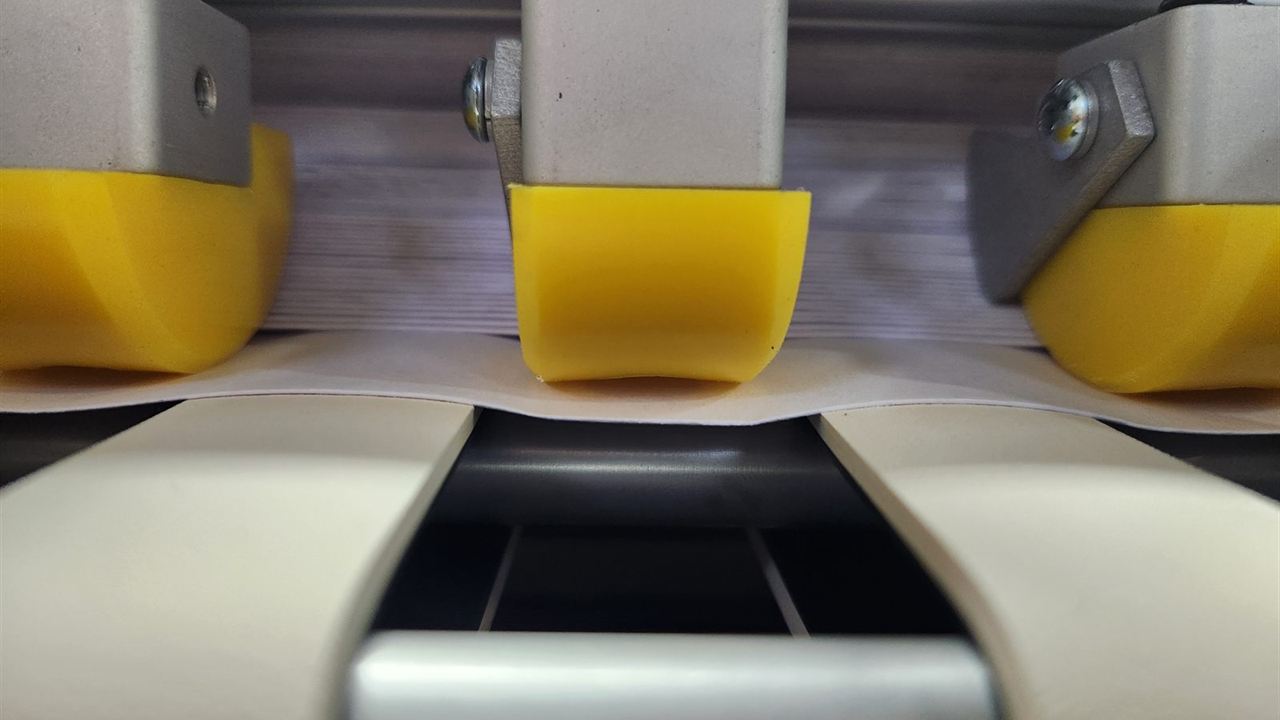
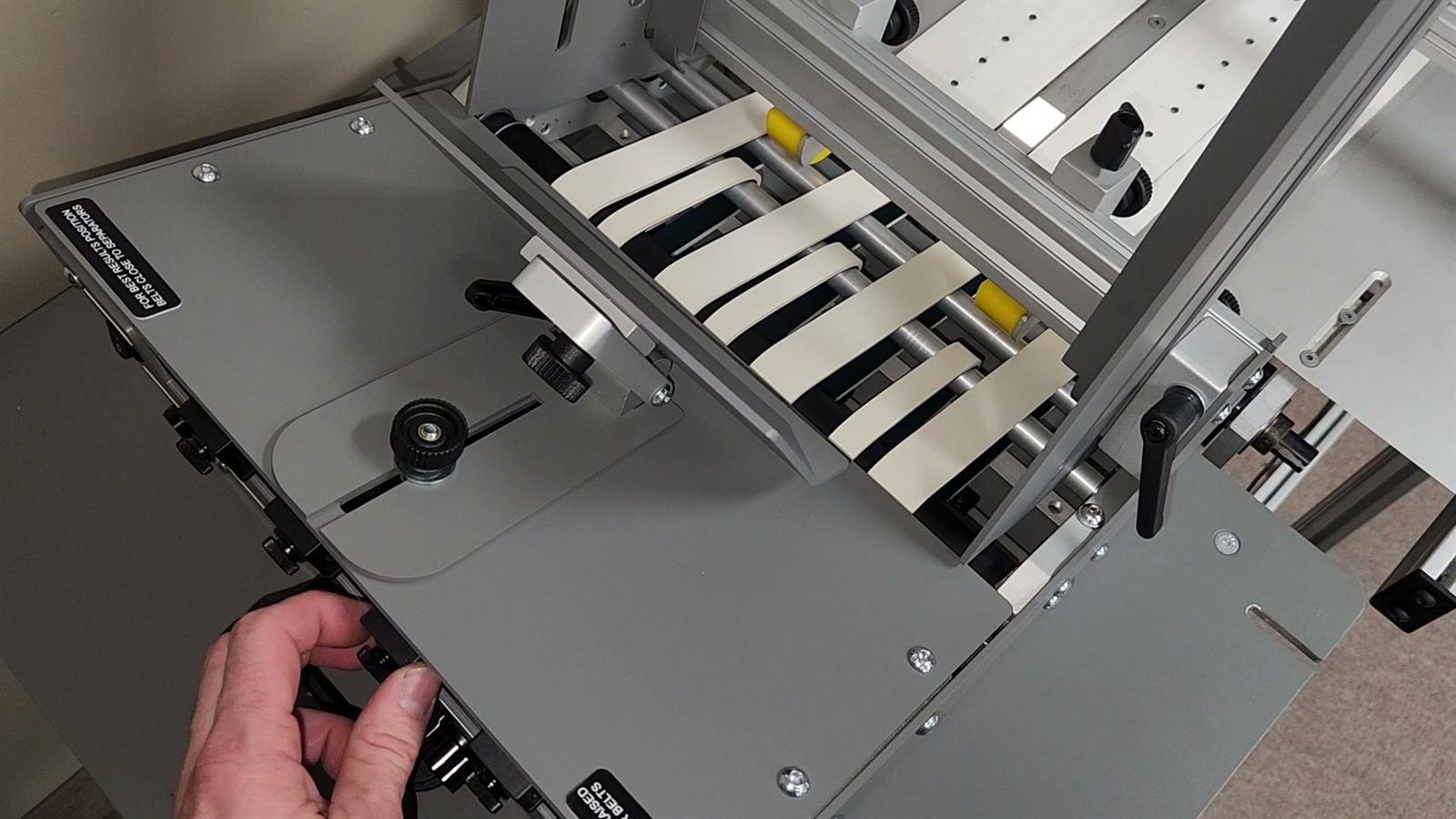
There is no second roller. The piece meets a fixed separator, buckles against it, and slips under on its own. The sheet beneath never gets pulled along, because nothing is gripping it.
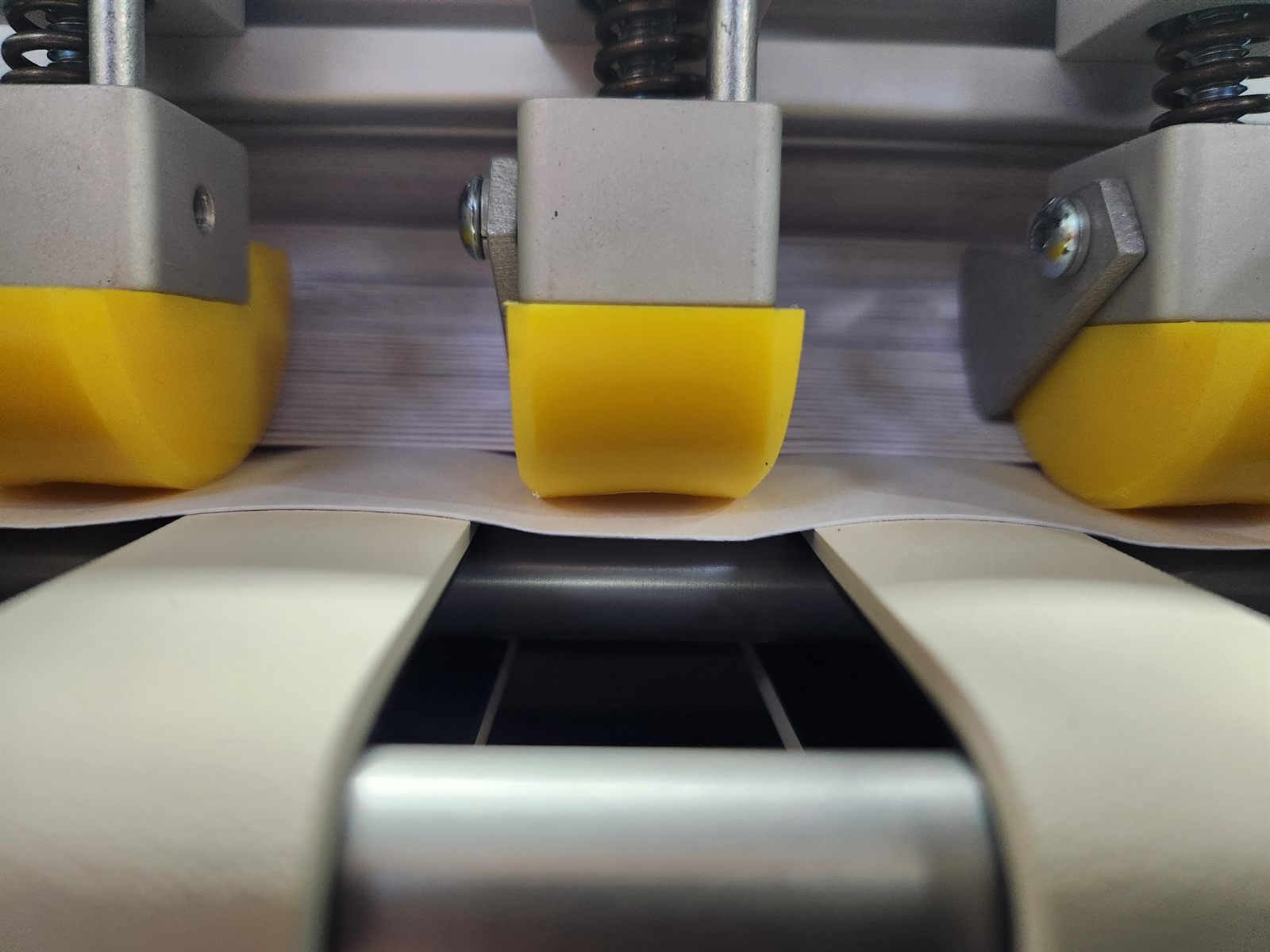
The yellow stones are the separator. The piece buckles under them and goes; the one beneath it stays put. Slow motion of this is still the clip worth shooting.
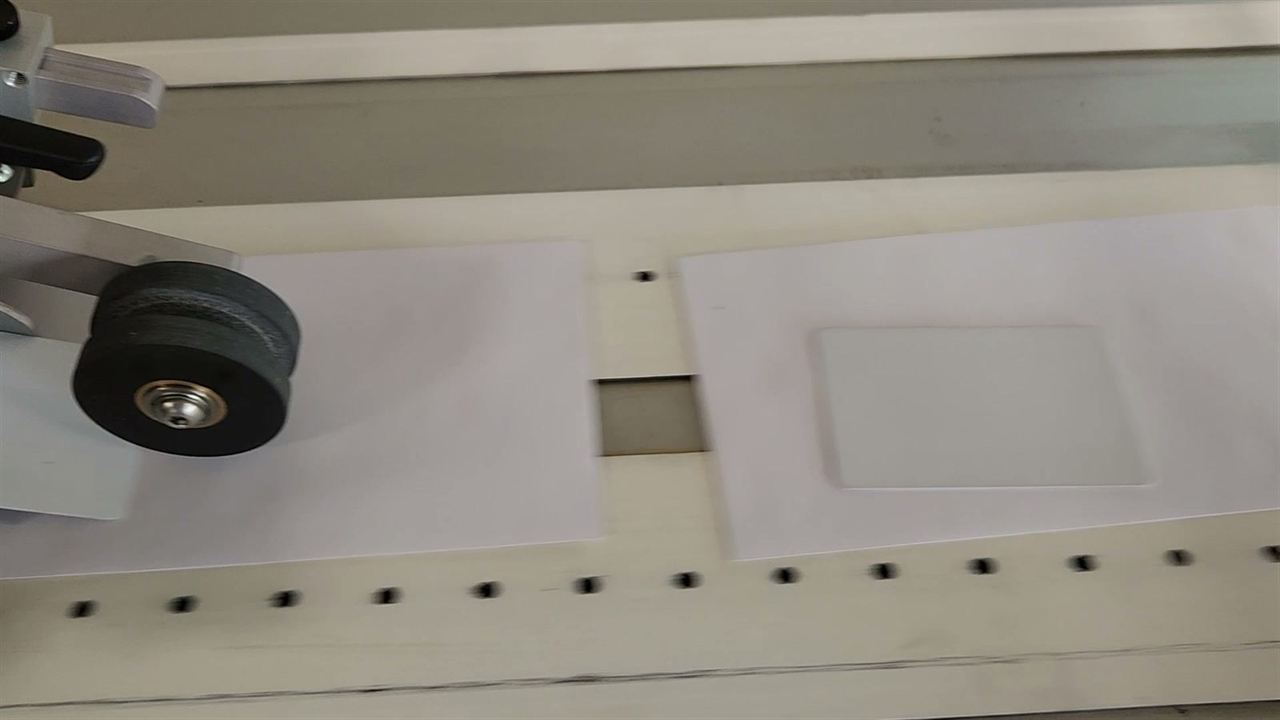
Once a piece clears the stack, the accelerator takes it and pulls it away from the one behind. You set the gap you want and it holds — at the start of the run and two hours in, when a friction-only feeder has quietly closed it up.
That matters most where something downstream is reading the piece: an inkjet base, a tabber, a camera. Even spacing is the difference between a clean pass and a machine that faults out.
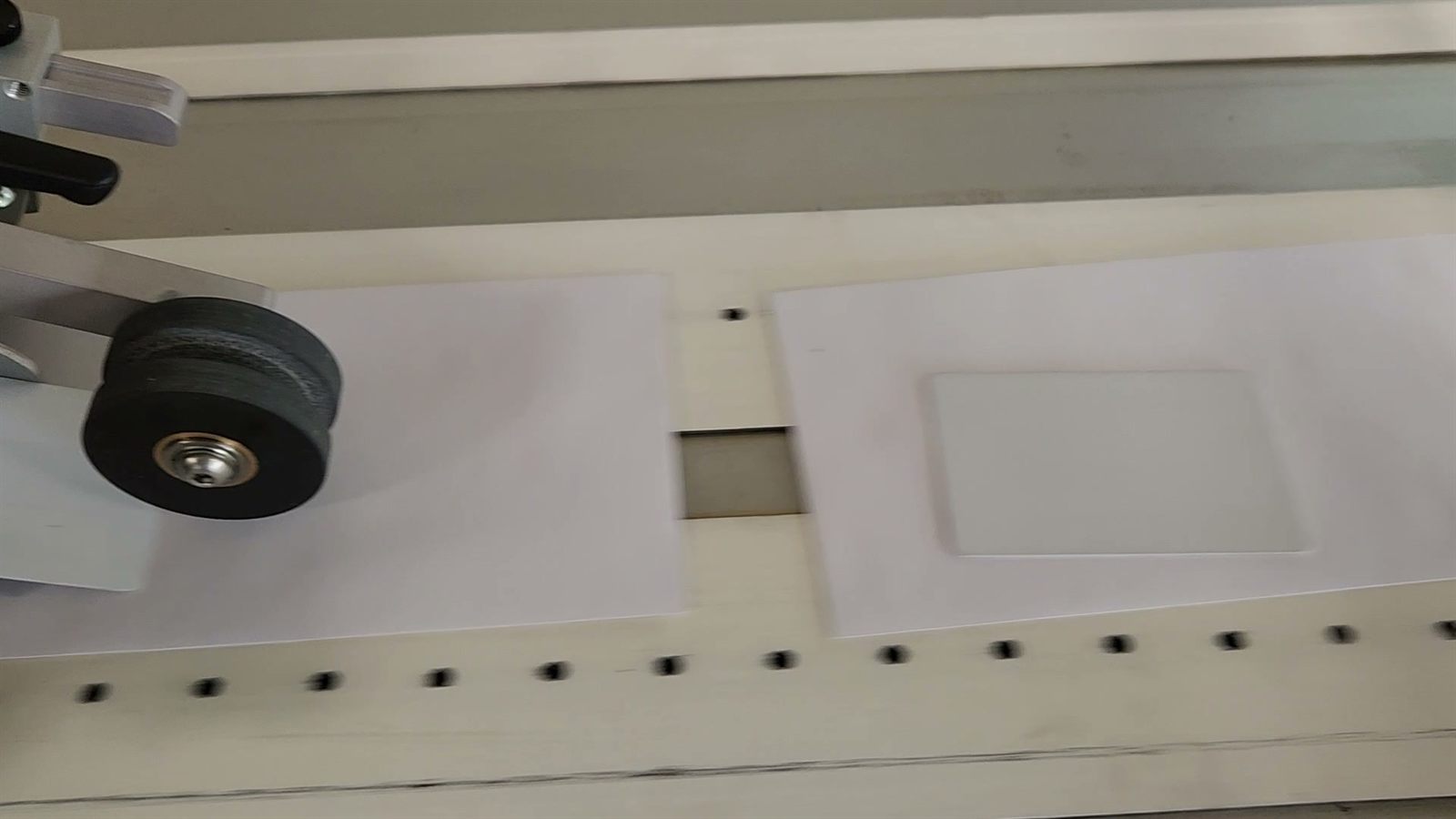
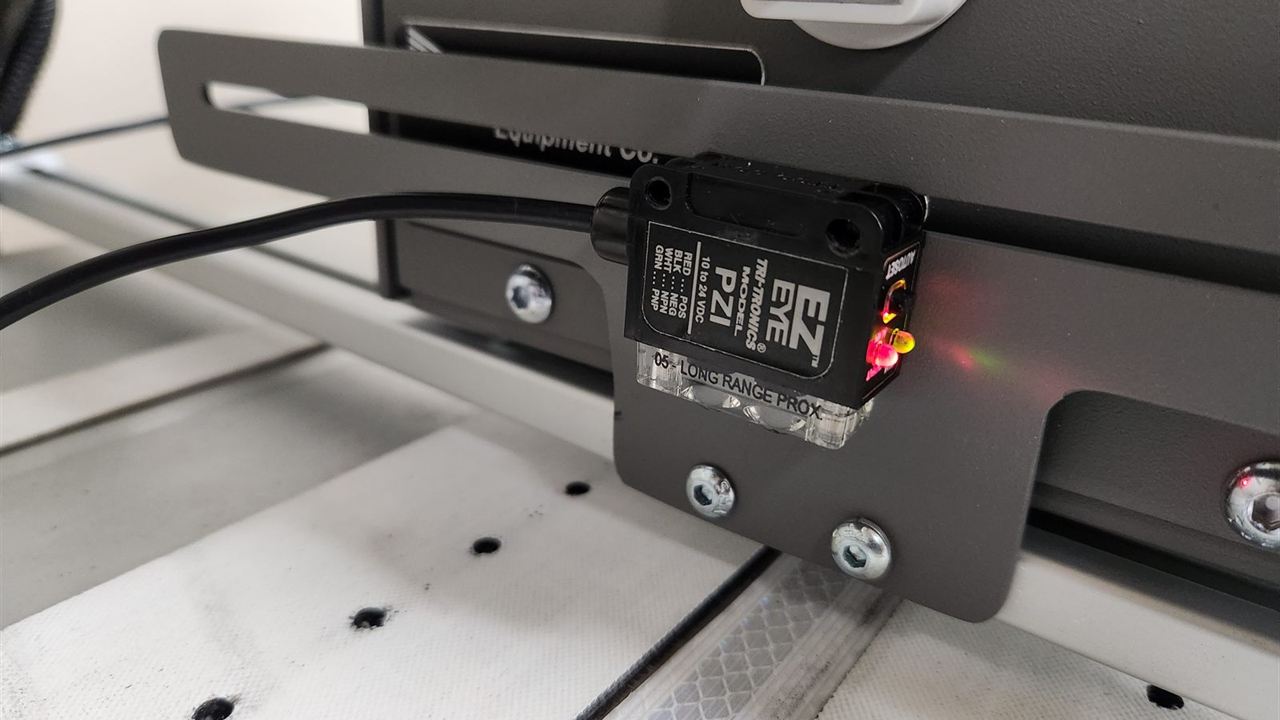
A sensor reads every piece off the deck, so the count is what actually fed rather than what the cycle counter believes fed. Run continuous until the hopper is dry, batch to a fixed number with a gap between batches, or feed one piece each time the machine downstream asks for it.
Then it hands off flat and square at the height you need — belt, conveyor, inkjet base, tabber, folder or packaging line.
Configure the modes you need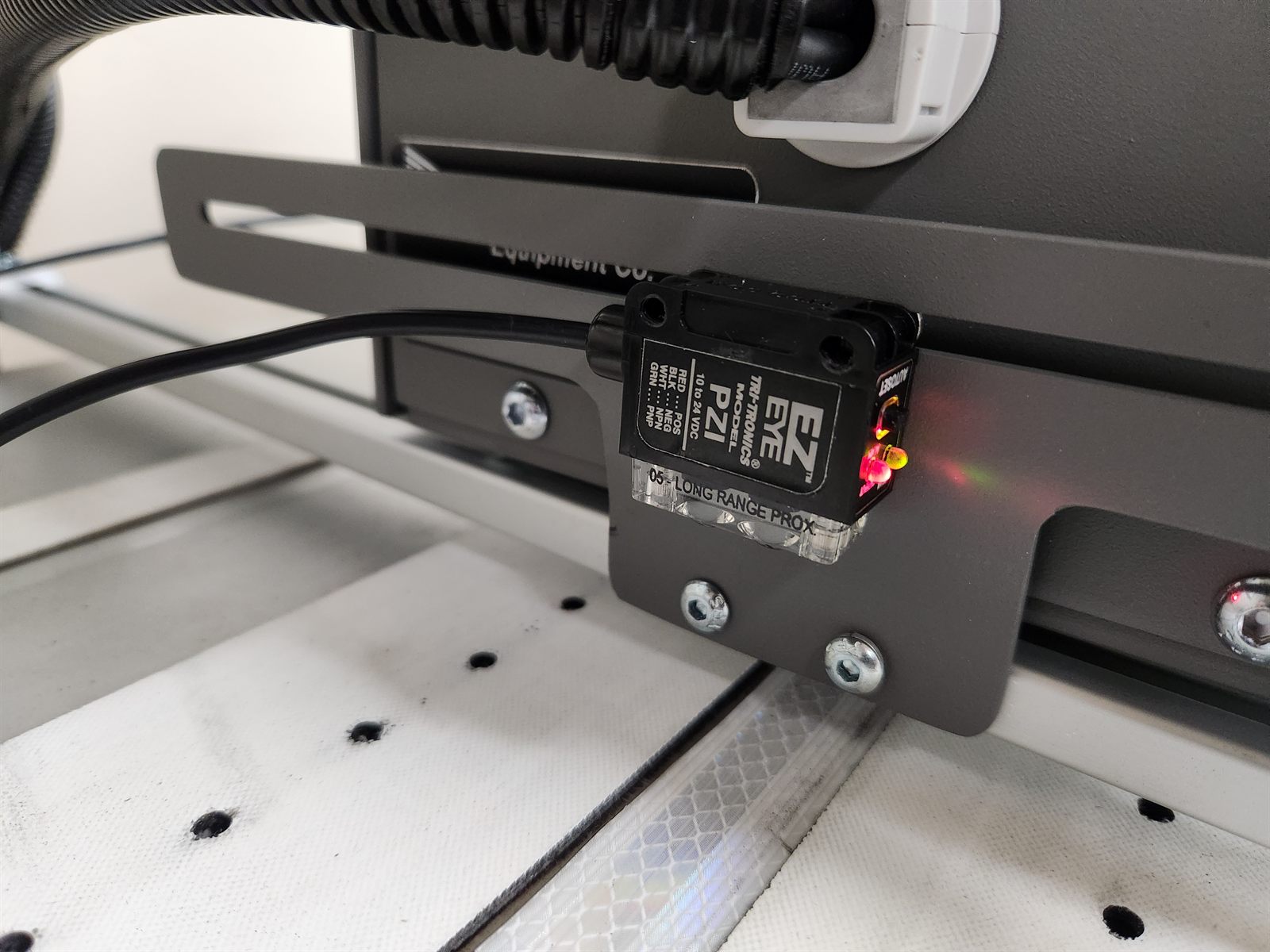
Belts are the only thing on a feeder that genuinely wears. Ours come out on drop-in shafts: pull the shaft, roll the belt off, roll the new one on, put the shaft back. Whoever is standing at the machine can do it between jobs, and it does not need a service call.
Reading about a paper path only gets you so far. Send us the piece that keeps stopping your line and we will film ours feeding it.